GDPR Compliance for Lead Generation: What You Need to Know
A practical guide to collecting and using B2B leads while staying compliant with GDPR, CCPA, and other privacy regulations.
Data privacy laws don't have to kill your lead generation. Here's how to stay compliant while still growing your business.
The Basics
What is GDPR?
The General Data Protection Regulation is an EU law that governs how personal data can be collected, processed, and stored. It applies to:
- Any company based in the EU
- Any company that processes data of EU residents
- Any company that offers goods/services to EU residents
Penalties: Up to €20 million or 4% of global revenue—whichever is higher.
What is CCPA?
The California Consumer Privacy Act is California's privacy law. Similar principles, different specifics:
- Applies to businesses serving California residents
- Revenue thresholds determine applicability
- Right to know, delete, and opt-out of sale
Does This Apply to B2B?
Yes. Business emails like john@company.com are still personal data because they identify an individual.
The Legal Basis for B2B Outreach
GDPR requires a "legal basis" for processing data. For B2B lead generation, you typically rely on:
Legitimate Interest
You have a legitimate interest in:
- Growing your business
- Reaching potential customers
- Building partnerships
But it must be balanced against the individual's rights and expectations.
When Legitimate Interest Works
- Data is publicly available (company websites, directories)
- The outreach is relevant to their role
- You provide easy opt-out
- You don't process sensitive data
When It Doesn't Work
- Purchasing lists of dubious origin
- Mass spamming unrelated contacts
- Processing data on protected characteristics
- Ignoring opt-out requests
Practical Compliance Checklist
Before Scraping
- [ ] Only scrape publicly available data
- [ ] Document your legitimate interest
- [ ] Check if the source prohibits scraping
- [ ] Verify you're not collecting sensitive data
During Processing
- [ ] Validate emails to reduce bounce
- [ ] Remove duplicates and errors
- [ ] Don't store data longer than needed
- [ ] Secure data with encryption
During Outreach
- [ ] Include your company identity
- [ ] Explain how you got their data
- [ ] Provide clear unsubscribe option
- [ ] Respond to opt-outs within 48 hours
After Outreach
- [ ] Honor deletion requests
- [ ] Keep records of consent/opt-out
- [ ] Regularly clean old data
- [ ] Document your compliance processes
How Scrappy Helps
We've built GDPR compliance into the platform:
Data Minimization
We only collect what you need:
- Business email addresses
- Professional phone numbers
- Company information
- Public social profiles
We never collect:
- Home addresses
- Personal phone numbers
- Health or financial data
- Protected characteristics
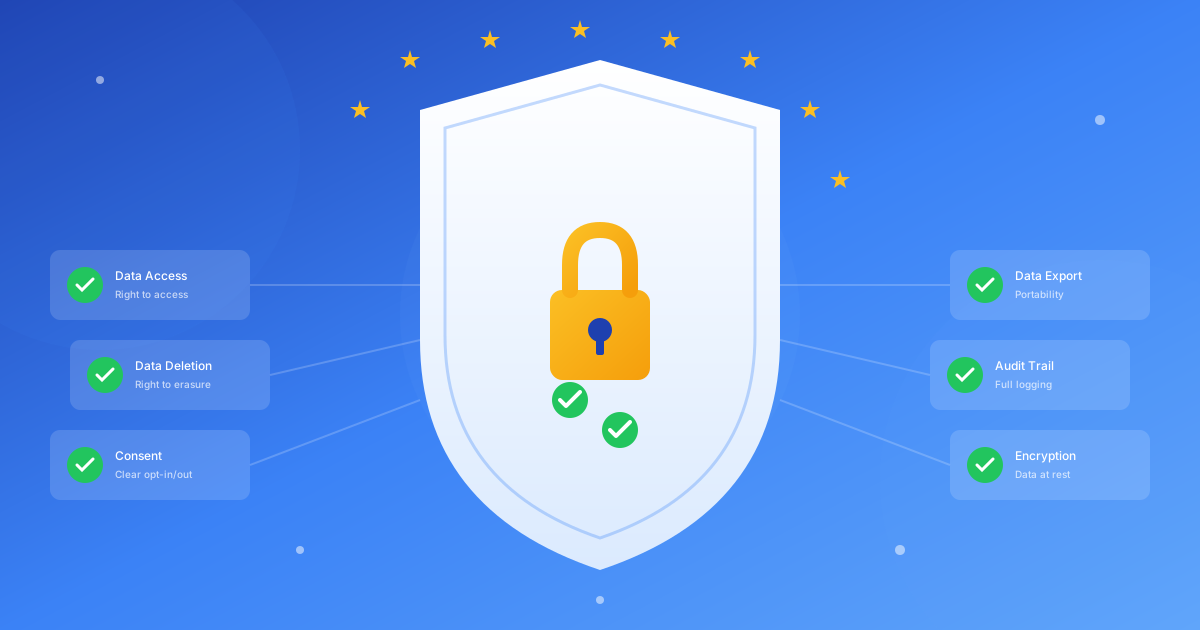
Right to Access
Any person can request their data:
- Export all data we hold about them
- See how it's been processed
- Know where it came from
Scrappy provides these reports automatically.
Right to Deletion
Users can request deletion:
- 30-day grace period to reconsider
- Complete erasure after confirmation
- Audit trail for compliance
Data Retention
We don't keep data forever:
- Leads auto-delete after 12 months
- You can set shorter retention periods
- Verification cache clears after 30 days
Consent Management
Track consent for every lead:
- When consent was given/withdrawn
- What they consented to
- Full audit history
Sample Privacy Language
Include this in your outreach:
You're receiving this email because you're listed as [role] at [company] on [source]. If you'd prefer not to hear from us, simply reply with "unsubscribe" and we'll remove you immediately. You can also request a copy or deletion of any data we hold by contacting [privacy@yourcompany.com].
Common Questions
Can I scrape LinkedIn?
LinkedIn's ToS prohibits scraping. While legal battles are ongoing, it's generally safer to:
- Use LinkedIn Sales Navigator (their official tool)
- Scrape public company websites instead
- Use directories that allow data collection
What about bought lists?
Be very careful. Ask:
- Where did this data come from?
- Do individuals know their data is being sold?
- Is there documented consent?
- When was it last verified?
If you can't answer these questions, don't use the list.
Do I need explicit consent?
For B2B cold outreach based on legitimate interest, no. But you still need:
- Transparency about data collection
- Clear opt-out mechanisms
- Proper documentation
What if someone complains?
- Respond promptly (within 72 hours)
- Honor their request immediately
- Document the interaction
- Review your processes
Most complaints are resolved with quick, respectful action.
Red Flags to Avoid
🚩 "Unlimited" email lists for sale 🚩 No information about data origin 🚩 Lists of personal email addresses 🚩 Data on sensitive categories 🚩 Promises to bypass regulations 🚩 No opt-out mechanism provided
Best Practices Summary
Do This:
✅ Scrape publicly available business data ✅ Document your legitimate interest ✅ Validate emails before outreach ✅ Include clear opt-out in every message ✅ Honor deletion requests immediately ✅ Keep data only as long as needed ✅ Encrypt and secure all data
Don't Do This:
❌ Buy lists from unknown sources ❌ Ignore opt-out requests ❌ Store data indefinitely ❌ Collect personal (non-business) data ❌ Hide your identity in outreach ❌ Scrape login-protected areas
The Bottom Line
GDPR isn't anti-business—it's anti-abuse. Companies that:
- Respect privacy
- Are transparent
- Provide value
...can still do effective B2B lead generation.
Scrappy is built with compliance at its core. Use it responsibly, follow the guidelines above, and you'll stay on the right side of the law.
When in doubt, consult a privacy attorney for your specific situation.
Related Articles
Scaling Your Lead Generation: From 100 to 10,000 Leads
A practical guide to scaling your lead generation efforts without sacrificing quality or burning out your team.
Cold Email vs. Cold Calling: Choosing the Right Channel for Your Outreach
An honest comparison of cold email and cold calling, with frameworks for deciding when to use each approach.
Understanding Lead Scoring: Quality Over Quantity
Build a lead scoring system that helps your sales team focus on the prospects most likely to convert.